Serious Data Without the Serious Price Tag
By Dr. Barry Lotz, J.D., Ph.D. and Terry Ross
Golf Vacations Magazine
For years, launch monitors have been among golf’s most valuable training tools—and among its most expensive.
Professional systems can cost thousands, and sometimes tens of thousands, of dollars. They provide extraordinary amounts of information, but the reality is that the average golfer doesn’t necessarily need dozens of data points to make a practice session more productive.
That’s why the Shot Scope LM1 deserves attention.
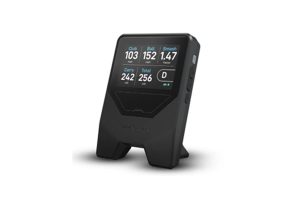 Priced at S199.99, the LM1 brings genuinely useful launch-monitor technology into a price category accessible to almost any serious golfer—and certainly to golf instructors looking for an affordable way to introduce objective data into their lessons.
It doesn’t attempt to be everything to everybody.
Instead, it concentrates on five fundamental measurements golfers can understand and actually use:
Club speed. Ball speed. Smash factor. Carry distance. Total distance.
It also incorporates a dedicated Speed Training Mode, an increasingly relevant feature as golfers recognize the relationship between clubhead speed and potential distance.
In an industry increasingly obsessed with giving golfers more data, Shot Scope has taken a refreshingly straightforward approach:
Give golfers the numbers that matter, make them easy to understand and make the technology affordable.
Five Numbers That Tell a Useful Story
The LM1 uses Doppler radar technology to measure its five key performance parameters.
Do significantly more expensive launch monitors provide considerably more information?
Of course.
Spin rate, spin axis, launch angle, angle of attack, club path and face angle can all be extremely valuable, particularly for professional instruction, sophisticated club fitting and highly accomplished players.
But how much of that information does the average golfer really need during an ordinary practice session?
For most players, improvement begins with considerably more basic questions.
How fast am I swinging?
How fast is the ball leaving the clubface?
How efficiently am I transferring energy to the golf ball?
How far is the ball actually carrying?
And how far does it ultimately travel?
The LM1 answers those questions without requiring the golfer to become an amateur launch-monitor technician.
Stop Guessing How Far You Hit Your Clubs
Perhaps the most practical benefit of the LM1 has little to do with changing the golf swing.
It has everything to do with knowing your distances.
One of the most common mistakes golfers make is overestimating how far they hit their clubs.
Ask someone how far they hit a 7-iron and you’ll frequently hear the distance of the best 7-iron they hit last month—not the distance of their normal shot.
Golf doesn’t care about your longest shot.
Golf rewards knowing your normal shot.
There is an enormous difference between believing your 7-iron carries 160 yards and discovering through repeated measurements that your realistic carry is actually 151.
That nine-yard difference can mean the difference between a birdie putt and trying to get up and down from a bunker.
This is where affordable launch-monitor technology can genuinely help golfers lower scores without changing their golf swing one degree.
Replace “I think” with “I know.”
Compact, Simple and Designed for Practice
The LM1 is small and light enough to fit comfortably into a standard golf bag and can be used outdoors on the practice range or indoors while hitting into a net.
The unit includes a clear 3.5-inch color display, approximately five hours of battery life, and an IPX3 rating for rain resistance.
We particularly like the built-in display.
Not every golfer wants to hit a shot and then pick up a smartphone to see what happened.
With the LM1, you can hit the ball, look at the screen, evaluate the result and hit another.
Technology should support the practice session rather than become the practice session.
But How Accurate Is It?
This is ultimately the question that determines whether a £200 launch monitor represents exceptional value or simply another golf gadget.
Independent testing by GolfMagic found the LM1’s distance measurements impressively accurate considering its price.
Carry-distance performance was particularly encouraging, while ball-speed information provides another useful measurement for golfers evaluating their ball striking and overall performance.
There is, however, an important qualification.
GolfMagic reported that the LM1 sometimes struggled to capture club speed accurately.
That deserves to be acknowledged.
Club-speed readings may not always demonstrate the consistency golfers would expect from considerably more expensive professional systems. Because smash factor is calculated using club and ball speed, inconsistencies in club-speed measurement can naturally influence that number as well.
But perspective is important.
We are discussing a launch monitor costing approximately £200—not a professional system costing thousands or tens of thousands.
The LM1 isn’t pretending to be a TrackMan or GCQuad.
Nor should anyone expect it to be.
The more appropriate question is whether the information it provides is useful enough to make practice more productive for the everyday golfer.
We believe the answer is yes.
What You Don’t Get
The LM1 doesn’t provide spin rate, spin axis, launch angle, angle of attack, club path or face angle.
Those measurements become important when conducting sophisticated club fittings, diagnosing complex ball-flight problems or working with elite players where small differences can have significant consequences.
But that isn’t the market for which the LM1 was designed.
Its purpose is considerably simpler:
Give golfers useful information without overwhelming them.
More numbers don’t automatically create better golfers.
Understanding what to do with the right numbers does.
The Shot Scope App Adds Considerable Value
The LM1 becomes even more useful when connected to the Shot Scope mobile app.
Club and shot information registered by the launch monitor can be synchronized with the app, allowing golfers to review previous practice sessions and build individual club-distance profiles.
Instead of simply hitting 50 balls and leaving the range, golfers can begin accumulating meaningful performance information.
Is my ball speed improving?
Are my carry distances becoming more consistent?
Where are the significant distance gaps in my set?
Is my speed-training program producing measurable improvement?
Those are productive questions.
Perhaps equally important in today’s increasingly subscription-driven technology market, Shot Scope provides this functionality without requiring an ongoing subscription.
Buy the LM1 and use its features.
That simplicity adds considerably to its long-term value.
Speed Training Adds Another Dimension
The dedicated Speed Training Mode deserves particular mention.
Speed training has become increasingly popular because golfers now understand that increasing clubhead speed—even modestly—can translate into meaningful additional distance.
The LM1 allows golfers to work specifically on speed, including sessions where hitting a golf ball isn’t necessary.
Given the reported limitations concerning occasional club-speed inconsistencies, we would concentrate primarily on trends rather than becoming obsessed with individual readings.
The objective isn’t to celebrate one unusually fast swing.
The objective is to gradually move your normal performance higher.
That’s the number that eventually matters on the golf course.
A Particularly Useful Tool for Golf Teachers
There is another group for whom we believe the LM1 deserves serious consideration: golf teaching professionals.
The Professional Golf Teachers Association of America (PGTAA) recommends the Shot Scope LM1 to its membership as an affordable and practical technology tool for instruction, student evaluation and personal practice.
Today’s golf teacher doesn’t necessarily need a $10,000 or $20,000 launch monitor to introduce meaningful data into a lesson.
What the teacher needs is information that helps the student understand what is happening without allowing technology to overwhelm the teaching process.
The LM1 fits that philosophy particularly well.
Suppose an instructor makes a relatively simple adjustment and the golfer suddenly produces better contact, improved ball speed and additional carry distance.
The student doesn’t simply have to hear:
“That was better.”
The instructor can say:
“That was better—and here’s the evidence.”
Objective feedback reinforces good teaching.
It doesn’t replace it.
A Special Benefit for PGTAA Members
As part of the PGTAA’s continuing commitment to providing members with access to useful golf equipment and teaching technology, PGTAA members are eligible to receive a special PGTAA member discount on the Shot Scope LM1.
That makes an already attractively priced launch monitor an even more compelling addition to the teaching professional’s equipment.
For instructors who have considered incorporating launch-monitor technology into their lessons but have been reluctant to invest thousands of dollars in a professional system, the LM1 represents an excellent entry point.
It’s small enough to remain in an instructor’s golf bag, quick enough to introduce during a lesson and straightforward enough that valuable teaching time isn’t lost navigating complicated software.
The PGTAA Philosophy: Technology Supports the Teacher
The PGTAA has always maintained that becoming a better golf teacher isn’t about accumulating equipment.
Great teachers understand people first, and golf swings second.
Technology becomes valuable when a knowledgeable instructor understands when to use it, which information matters and, equally importantly, which information the student doesn’t need.
The LM1 fits comfortably within that philosophy.
It doesn’t attempt to diagnose the golf swing for the instructor.
The LM1 provides the information.
The teacher provides the interpretation.
That distinction becomes increasingly important as artificial intelligence, launch monitors, swing-analysis applications and other technologies become more prevalent throughout golf instruction.
The teacher remains the teacher.
Our Verdict
After decades spent around golf instruction, equipment, journalism and the golf industry, we’ve both seen technological products come and go.
The most sophisticated product isn’t necessarily the most useful.
The best technology is technology golfers will actually use.
That’s where Shot Scope LM1 succeeds.
It’s compact, straightforward and provides meaningful performance information. Its distance measurements are impressive for its price category, the color display makes practice simple, and integration with the Shot Scope app substantially increases its usefulness.
Perhaps most importantly in today’s subscription-driven world, there are no mandatory ongoing subscription fees.
Its principal weakness is the occasional inconsistency in club-speed measurement identified during independent testing. Advanced golfers, professional club fitters and instructors working at the highest levels should also recognize that spin, launch and detailed club-delivery measurements aren’t part of the package.
But those limitations shouldn’t obscure what Shot Scope has accomplished.
For approximately $199.00, the LM1 gives everyday golfers and teaching professionals access to meaningful information that not very long ago required considerably more expensive equipment.
Our Ratings
| Category | Rating |
| Distance Accuracy | ★★★★½ |
| Ease of Use | ★★★★★ |
| Portability | ★★★★★ |
| Features | ★★★★½ |
| App Integration | ★★★★★ |
| Value | ★★★★★ |
| Overall | 4.8/5 |
The Bottom Line
If you’re a professional club fitter requiring spin axis, face-to-path relationships and detailed launch conditions, the LM1 isn’t designed to replace your professional equipment.
If you’re a golfer who wants to know how far you actually hit your clubs, how efficiently you’re striking the ball and whether your practice is producing measurable improvement, the Shot Scope LM1 makes a compelling argument.
For golf instructors—particularly PGTAA teaching professionals—it provides an affordable way to introduce objective data into lessons without allowing technology to dominate the teaching process.
It doesn’t overwhelm you with numbers.
It gives you useful ones.
And ultimately, that’s what good golf technology should accomplish:
Measure what matters. Understand what it means. Practice with a purpose. Then trust it on the golf course.
PGTAA Recommended
For additional product information, visit Shot Scope.
Dr. Barry Lotz, J.D., Ph.D. is the founder and director of the Professional Golf Teachers Association of America (PGTAA), a member of the Golf Writers Association of America, author and longtime golf equipment writer.
Terry Ross has covered sports as both a print and radio journalist for more than 45 years and is Associate Editor of Golf Vacations Magazine. He has also served as a consultant to the golf industry in a variety of capacities, including PGA Tour events, and has been a regular columnist for the Long Beach Business Journal. He is based in Orange County, California.